

Direct answer
Zendesk beams AI SaaS spend management: what CRM buyers should take from it
Zendesk said on June 15, 2026 that it acquired intellectual property from beams and welcomed the beams team. Zendesk framed the move around AI-powered employee service, autonomous IT support, app access, subscription management, and spend visibility. For CRM and support buyers, the practical issue is whether AI and SaaS tools reduce operating work or create a new cost-control problem.
Published 6/24/2026. News event: 6/15/2026.
What happened
- Zendesk announced that it acquired intellectual property from beams and brought over the beams team.
- Zendesk described beams as an agentic AI startup focused on subscription management, app access requests, IT support, and visibility into SaaS usage and spend.
- Zendesk said beams technology will help expand AI-powered employee service capabilities inside Zendesk Resolution Platform, including support for employee-facing service workflows.
- Futurum described the move as a sign that Zendesk wants to extend beyond traditional customer support into broader enterprise service management where AI handles internal service requests and IT workflows.
Why this is trending
- AI support tools are no longer only customer-facing. Vendors are moving toward employee service, IT support, access requests, and back-office workflows.
- SaaS cost anxiety is rising because AI features, usage charges, seats, app subscriptions, and automation projects can all grow at the same time.
- The story gives buyers a concrete question: will the next AI support feature cut work, or will it add more software, more admin, and more cleanup?
The CRM Costs take
A CRM or helpdesk buyer should not copy Zendesk's acquisition strategy. The useful lesson is to build cost visibility before expanding AI. If a business cannot see which tools are used, who owns approvals, where access requests go, and which workflows still need people, AI agents can become another layer of unpriced operating work.
SaaS and AI Spend Control Map
A buyer framework for separating useful AI support automation from app sprawl, approval gaps, duplicate tools, hidden usage, and admin work.
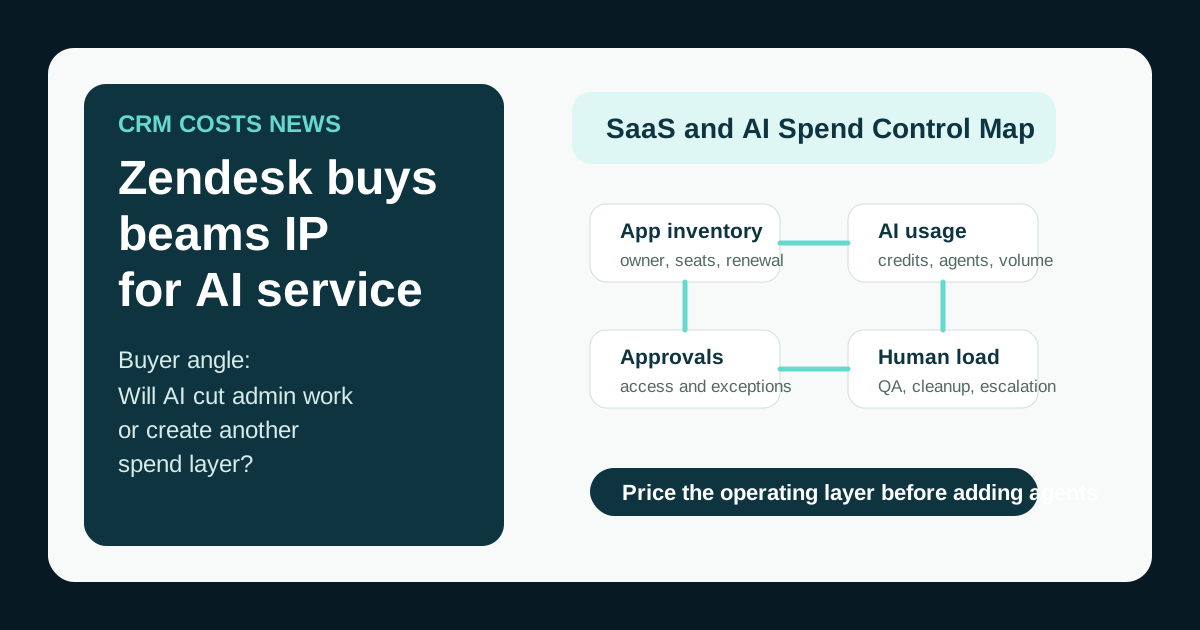
Create one app inventory with owner, user count, renewal date, and workflow purpose.
Model expected ticket, call, chat, and internal-service volume before enabling AI broadly.
Define approval rules and exception owners before automating access workflows.
Map the request-to-resolution path before buying another app or agent.
Budget human ownership for exceptions, cleanup, reporting, training, and escalation review.
What buyers should do next
Buyer FAQs
What did Zendesk acquire from beams?
Zendesk said it acquired intellectual property from beams and welcomed the beams team to expand AI-powered employee service capabilities inside Zendesk Resolution Platform.
Why does this matter for CRM and helpdesk buyers?
It shows that AI service workflows are expanding into employee support, app access, subscriptions, IT requests, and SaaS spend. Buyers need cost visibility before adding more AI and SaaS tools.
Does AI support automation automatically reduce software cost?
No. AI can reduce repetitive work, but it can also add usage charges, integrations, admin work, access risk, QA needs, and support staffing unless buyers map the full operating layer.
What should buyers check first?
Start with a SaaS and workflow inventory: tool owner, active users, renewal date, AI usage, integration dependency, support queue, and approval path.