

Direct answer
Sinch 74% rolled back AI agents: what CRM buyers should take from it
Sinch research reported that 74% of companies have rolled back at least one deployed AI agent, according to independent coverage of the report. The buyer lesson is not to avoid support automation. It is to treat rollback as part of the cost model before cutting seats, changing queues, or promising resolution savings. Support leaders need proof that humans, data, QA, and customer recovery still work when the agent fails.
Published 7/1/2026. News event: 6/25/2026.
What happened
- Sinch's research focused on companies deploying AI agents into customer communication and support workflows.
- Independent coverage highlighted the headline finding that roughly three-quarters of surveyed enterprises had rolled back at least one AI-agent deployment.
- The rollback framing matters because it separates AI demos from live operating systems that touch queues, tickets, customer messages, routing, and escalation.
- The story follows a wave of vendor claims that AI agents can reduce support cost, resolve issues autonomously, and replace routine customer-service work.
- For CRM and support operations teams, the practical question is what remains staffed, owned, measured, and recoverable when an AI agent is paused or degraded.
Why this is trending
- The 74% number is easy to share because it cuts against the default AI-agent marketing story that production deployment is mostly a matter of buying the right platform.
- Support leaders are under pressure to show AI savings, but rollbacks reveal hidden costs in QA, data cleanup, supervisor review, human coverage, and customer communication.
- The finding gives buyers a concrete way to challenge pay-per-resolution, autonomous-agent, and staffing-reduction claims before those claims become budget commitments.
The CRM Costs take
A CRM or helpdesk buyer should not budget AI agents as pure labor replacement. The buyer needs a rollback cost map: which queues fall back to humans, who watches failures, which customers get recovery, what data must be cleaned, how supervisors review edge cases, and what cost is still present after automation launches.
AI Agent Rollback Cost Map
A buyer framework for pricing the operating layer behind AI support agents: fallback staffing, queue ownership, QA sampling, escalation, customer recovery, change controls, and incident communication.
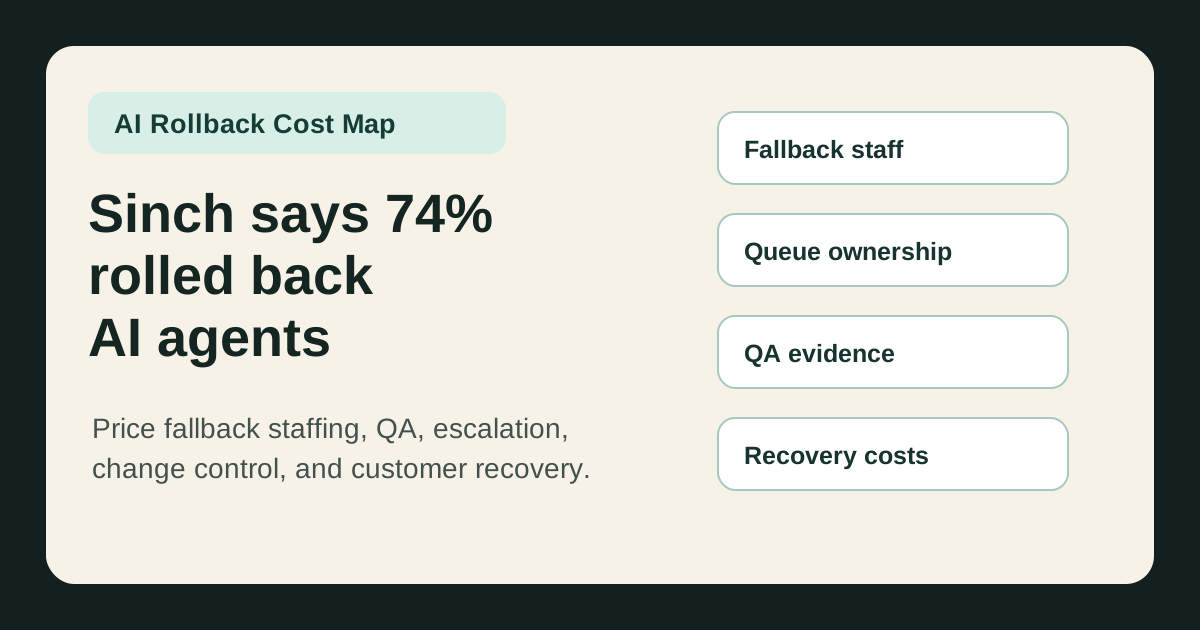
Keep a named coverage plan with staffing thresholds, fallback shifts, queue owners, and recovery triggers.
Define ownership states, handoff notes, SLA clocks, and supervisor review rules before launch.
Review failed conversations, transfer reasons, reopened cases, sentiment, refund events, and complaint themes.
Require versioned changes, test scenarios, approval thresholds, and rollback points.
Create recovery scripts, callback queues, supervisor approval paths, and incident communication templates.
What buyers should do next
Buyer FAQs
What did Sinch report?
Independent coverage of Sinch's research reported that 74% of surveyed companies had rolled back at least one deployed AI agent.
Does rollback mean AI agents do not work?
No. It means production AI agents need operating controls: fallback staffing, queue ownership, QA, change control, escalation, and customer recovery.
What should support buyers audit first?
Start with fallback staffing, unresolved-case ownership, regression testing, failed-conversation review, reopens, complaint handling, and recovery costs.