

Direct answer
ServiceNow API exposure customer data support tickets June 2026: what CRM buyers should take from it
ServiceNow disclosed a June 2026 security issue after an unauthenticated API endpoint allowed queries against some customer instance data. BleepingComputer reported that the vulnerable endpoint could query customer instances, while TechRadar said the affected instances could contain support tickets, employee records, internal documentation, assets, security incidents, workflow data, and configuration details. Support leaders should treat tickets as sensitive operational data, not low-risk helpdesk text.
Published 6/29/2026. News event: 6/10/2026.
What happened
- BleepingComputer reported on June 9, 2026 that ServiceNow warned customers after attackers exploited an unauthenticated API flaw through a vulnerable endpoint.
- TechRadar reported that ServiceNow applied a fix on June 5 and that the issue primarily affected customers on the Australia platform release or older releases with certain configuration changes.
- Rescana's incident analysis identified the endpoint as /api/now/related_list_edit/create and said the configuration allowed unauthenticated requests to query sensitive customer-instance data.
- Rescana said the potentially exposed data could include IT support tickets, employee records, internal documentation, asset inventories, security incident reports, workflow data, and configuration details.
- ServiceNow Community posts from customers show the operational burden of reviewing large volumes of logs after receiving notice of suspicious activity.
Why this is trending
- ServiceNow is a core ITSM and workflow platform, so an API exposure story immediately becomes a ticket-data and operational-continuity concern.
- Support and CRM teams are adding AI summaries, bots, outsourced agents, integrations, and analytics to the same records that may hold sensitive customer and internal data.
- The incident is a reminder that ticket history can contain secrets, credentials, account details, screenshots, attachments, complaints, and internal routing context.
The CRM Costs take
A support-ops buyer should not grant broad helpdesk, CRM, or ticket access to AI tools or outsourced agents until ticket fields, attachments, credentials, logs, and integration users are mapped. Every support workflow needs a data boundary, a redaction rule, an access owner, and an incident-review path.
Support Ticket Data Exposure Map
A buyer framework for auditing ticket fields, credentials, attachments, AI summaries, integration users, outsourced access, logs, and incident review before expanding support automation.
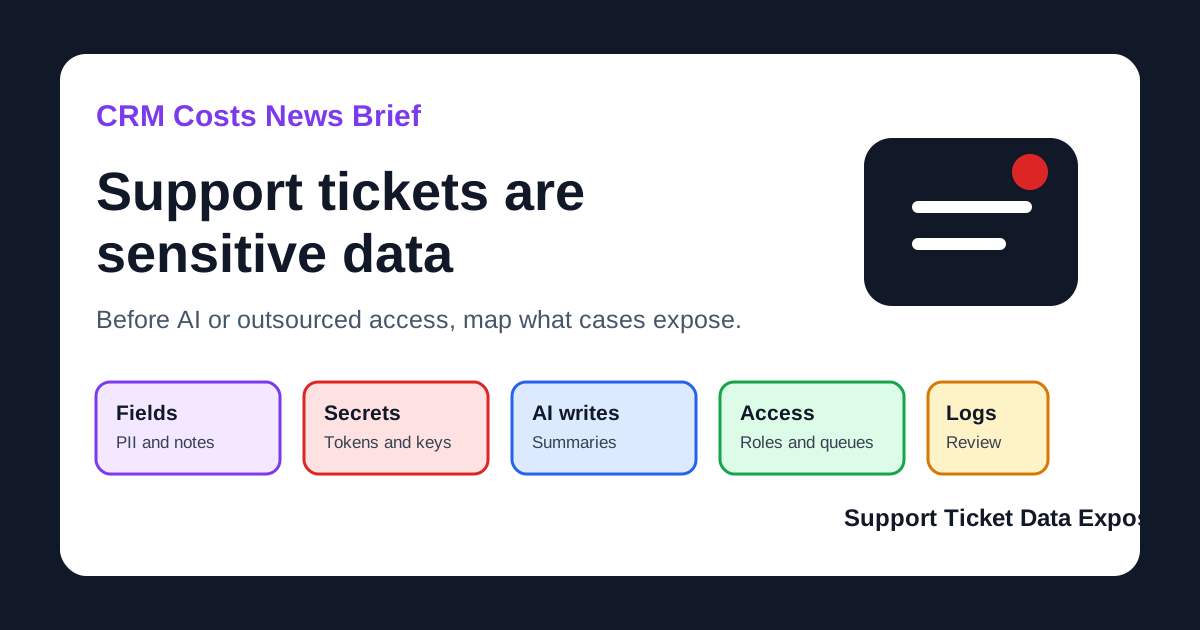
Classify fields by sensitivity and restrict high-risk fields before expanding automation or third-party access.
Add redaction rules, secret-handling guidance, and QA checks for tickets that contain access material.
Require summary redaction, source-field limits, approval rules, and logs for every AI write action.
Use role-based queues, least-privilege access, masked fields, supervised workflows, and named escalation owners.
Define log retention, suspicious-query searches, affected-record review, and customer-notice decision rules.
What buyers should do next
Buyer FAQs
What did ServiceNow fix?
Reports say ServiceNow applied a June 5, 2026 hosted-instance security update after an unauthenticated API endpoint could allow broader access to some customer instance data than intended.
Why is this a support-ops issue?
Support tickets can contain customer details, employee records, internal notes, credentials, screenshots, attachments, workflow data, and configuration information. That makes ticket access a data-risk and cost-risk problem.
What should buyers audit first?
Start with ticket-field sensitivity, credential leakage, attachment access, AI summary destinations, outsourced-agent permissions, integration users, and API logging.