

Direct answer
Salesforce ServiceNow AI Armageddon fears too extreme Guggenheim upgrade: what CRM buyers should take from it
Salesforce and ServiceNow shares rallied after Guggenheim upgraded both stocks, arguing that AI 'Armageddon' fears had become too extreme, according to MarketWatch and other financial coverage. The buyer lesson is not that CRM risk disappeared. It is that support operations should avoid panic replacement. Keep systems of record, clean data, escalation paths, governance, and measured AI pilots while testing where AI actually reduces cost.
Published 7/2/2026. News event: 7/1/2026.
What happened
- MarketWatch reported that Guggenheim upgraded Salesforce and ServiceNow to buy, saying fears of an AI-driven software Armageddon had become too extreme.
- The same coverage said both stocks had fallen sharply in 2026 before the upgrade and then rallied after the analyst call.
- Barron's reported the Salesforce upgrade and framed the stock move around AI pressure, valuation, and the analyst's view that the market had over-discounted the threat.
- Barchart's coverage said the analyst saw AI pressure on CRM software but not a scenario where it simply kills the category.
- For support operations buyers, the news turns a stock-market debate into a software-stack question: what parts of CRM remain essential when AI changes how work gets done?
Why this is trending
- The 'AI Armageddon' phrase travels because it captures the current fear that AI agents could erode CRM, IT service management, and support software economics.
- Salesforce and ServiceNow are anchor platforms for customer data, ticketing, workflow, reporting, governance, and escalation, so market swings feed directly into buyer conversations.
- The upgrade gives operators a reason to move past binary thinking and evaluate which CRM costs are durable, which can be automated, and which require cleanup before AI pilots scale.
The CRM Costs take
A CRM or support-ops buyer should not react to AI disruption by ripping out systems of record or approving every AI add-on. The buyer needs a resilience matrix: what customer data must stay authoritative, where AI can reduce manual work, which workflows need human escalation, how admin costs are controlled, and what evidence proves AI is improving outcomes.
CRM Stack Resilience Matrix
A buyer framework for deciding which CRM and support-system costs to keep, renegotiate, automate, or retire while AI pressure changes software valuations and vendor claims.
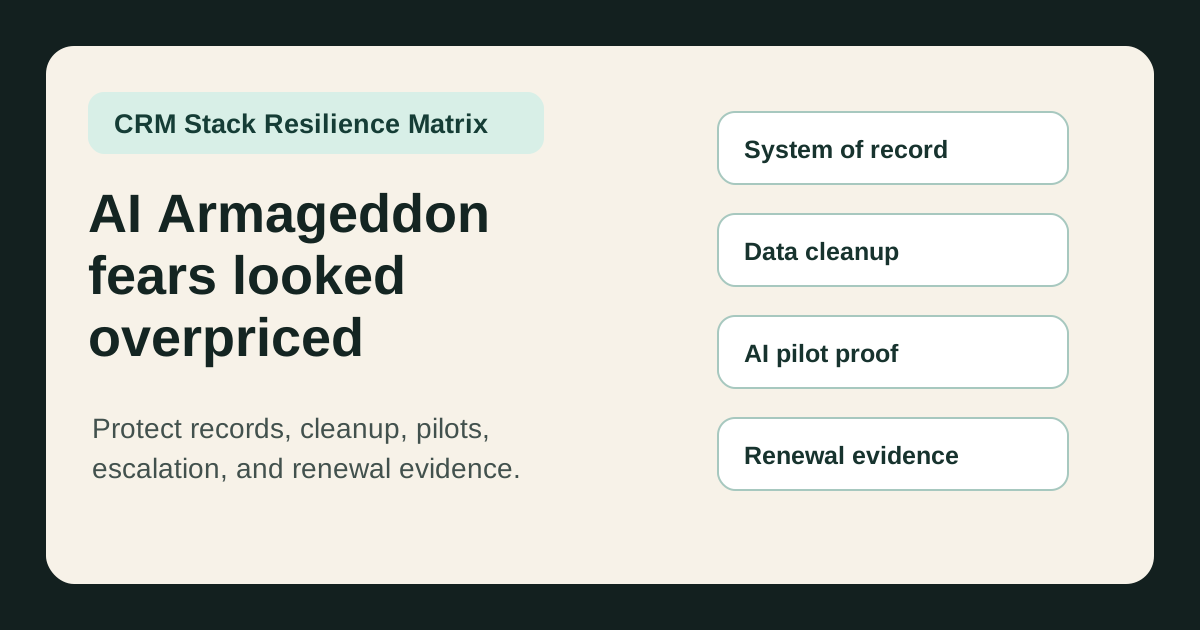
Define source-of-truth fields, write permissions, audit logs, and data-quality owners before expanding automation.
Fund cleanup, dedupe, ownership checks, field governance, and QA sampling before counting AI savings.
Track escalation quality, reopened cases, exception handling, supervisor review, and customer repair work.
Compare gross automation gains with total AI operating cost and retained human coverage.
Build a renewal packet with usage, workflow criticality, AI pilot evidence, cleanup backlog, and exit costs.
What buyers should do next
Buyer FAQs
What happened to Salesforce and ServiceNow shares?
MarketWatch reported that Salesforce and ServiceNow rallied after Guggenheim upgraded both stocks and said AI Armageddon fears had become too extreme.
Does this mean AI is not a threat to CRM software?
No. The analyst coverage still treats AI pressure as real. The operating lesson is to test where AI improves cost and outcomes instead of making panic platform decisions.
What should support buyers audit first?
Start with systems of record, data cleanup, escalation paths, AI pilot economics, admin cost, retained staffing, and renewal evidence.