

Direct answer
Revolut fake government request CRM data proof map: what CRM buyers should take from it
Revolut's fake government-request breach turns lawful-data request handling into a CRM and support-ops cost issue. If a request appears to come from a trusted government domain, the support operation still needs independent verification, approval routing, data minimization, access logs, customer-notice rules and closure evidence. Buyers should budget those controls before giving agents, admins or outsourced teams access to KYC files, transaction histories or account records.
Published 9/15/2026. News event: 9/11/2026.
What happened
- Reuters, via CNA, reported September 13 that Revolut said a limited number of customers were affected after fraudulent data requests were made from compromised government email accounts.
- The same Reuters report said Revolut stated that customer funds were not affected and that it had implemented new measures to prevent similar incidents.
- The Block reported September 12 that Revolut's disclosure tied the incident to fake requests sent from government-domain email accounts.
- The Block reported that exposed data could include KYC information, business account details, transaction histories and bitcoin addresses, depending on the request.
- The incident shows how a trusted-looking email domain can turn a support or compliance workflow into a data-exfiltration path.
- For CRM buyers, the practical issue is not only cyber defense; it is how support, compliance and back-office teams verify requests before exporting customer records.
Why this is trending
- The story converts an abstract data-governance issue into a concrete support workflow: someone receives a request, decides whether it is lawful, pulls records and sends data.
- Government-domain email can feel authoritative even when an account or mailbox has been compromised, so domain trust alone is not enough proof.
- CRM and helpdesk systems often centralize identity documents, notes, transaction context, attachments, call transcripts and customer histories.
- Outsourced support, virtual assistants, compliance analysts and CRM admins may all touch request intake or data export workflows unless boundaries are explicit.
- Customers judge the brand on the notice, explanation and recovery experience, even when the initial deception starts outside the CRM platform.
The CRM Costs take
A CRM buyer should not evaluate support data access only by role title or software permission. Ask how lawful-data requests are authenticated, who approves release, which fields are minimized, how exports are logged, when customers are notified, and how suspicious requests are escalated. The cost is operational: secure intake, second-channel verification, legal review, audit logging, customer recovery and recurring drills all need owners.
CRM Data Request Proof Map
A CRM and support-ops buyer map for budgeting lawful-request intake, domain verification, KYC data scope, access logs, customer notices, regulator handoff and incident closure.
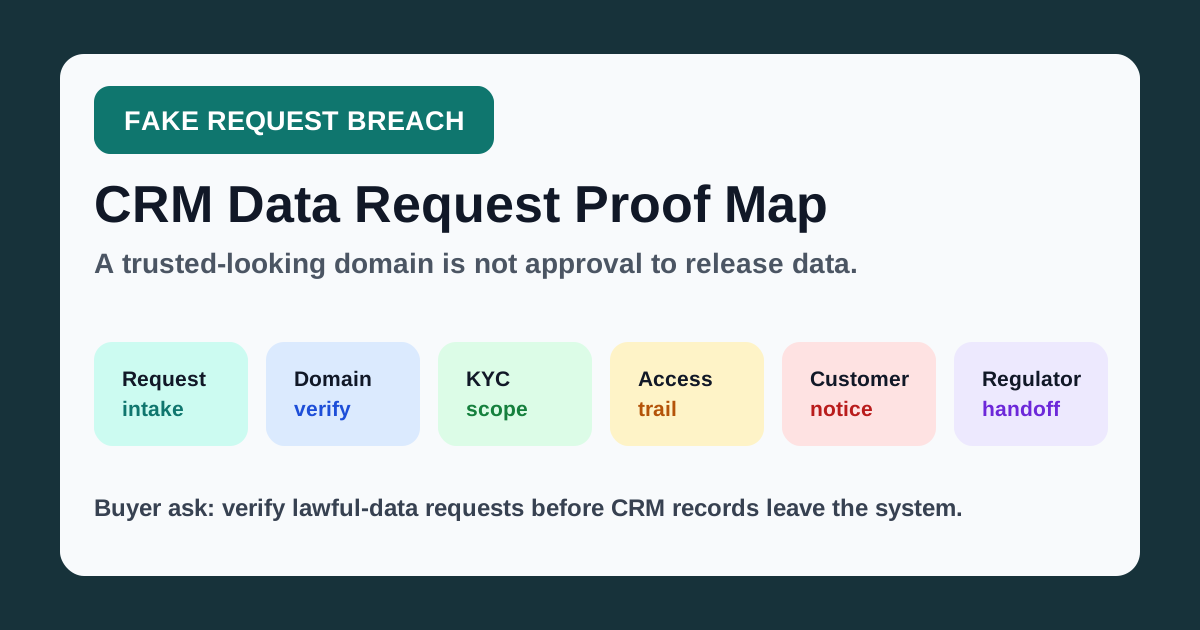
Create a single intake path with required metadata, jurisdiction, requester identity, legal basis and approval owner.
Require second-channel confirmation through published contacts, portal validation, case numbers or counsel-approved procedures.
Map permissible fields by request type and keep sensitive documents, transaction histories and wallet data behind stricter approval.
Attach access logs, export hashes, reviewer notes, timestamps and recipient details to the closure packet.
Prepare notice language, fraud guidance, account-monitoring steps, escalation queues and dispute intake.
Name an incident owner and preserve the request, verification steps, customer impact, notifications and remediation evidence.
What buyers should do next
Buyer FAQs
Is this only a fintech problem?
No. Any CRM or support operation that stores identity documents, payment context, account notes, transactions, attachments or customer histories can face fraudulent lawful-request risk.
What is the highest-priority control?
Independent requester verification. A government-looking domain or urgent email should not be enough to release customer data without a second approved validation path.
What should buyers budget after verification?
Budget data minimization, export logging, legal review, access permissions, customer notices, fraud-support scripts, regulator evidence and periodic request-handling drills.