

Direct answer
OpenAI IPO delay software stocks Salesforce ServiceNow rally: what CRM buyers should take from it
MarketWatch reported on June 26, 2026 that ServiceNow, Salesforce, and other software stocks rallied as investors reacted to reports that OpenAI may delay an IPO and that the AI threat to software vendors looked less certain. For CRM and support buyers, the lesson is not to ignore AI. It is to avoid panic-driven platform churn and instead protect the durable support stack: system of record, clean data, workflow ownership, human escalation, and measured AI pilots.
Published 6/28/2026. News event: 6/26/2026.
What happened
- MarketWatch reported that software stocks stood out as investors reassessed the OpenAI threat after reporting that OpenAI may hold off on an IPO until next year.
- A separate MarketWatch report connected a broader tech selloff to worries about OpenAI's IPO timeline and the cost of AI infrastructure.
- Barron's independently reported that AI spending scrutiny and the OpenAI IPO-delay report weighed on parts of the tech market, including AI infrastructure names.
- The same market reaction lifted attention on established software companies such as ServiceNow and Salesforce, which had been treated as vulnerable to AI-native disruption.
- The buyer signal is volatility: today's AI panic can become tomorrow's software rebound, but support operations still need functioning CRM, helpdesk, and data workflows.
Why this is trending
- OpenAI's funding, infrastructure cost, and IPO timeline are market-wide AI signals, so reports about delay quickly affect software, cloud, and chip narratives.
- CRM and service software vendors have been under pressure from claims that AI agents will replace large parts of traditional support software.
- The rally showed that investors are still debating whether AI-native products replace incumbent software or become another layer inside existing systems.
The CRM Costs take
A support-ops buyer should not rip out CRM or helpdesk infrastructure because the AI narrative sounds inevitable, and should not ignore AI because one market report made software stocks rally. The practical move is resilience: keep the system of record stable, clean the data AI depends on, pilot automation in narrow queues, and measure rework, escalation, and total cost before changing platforms.
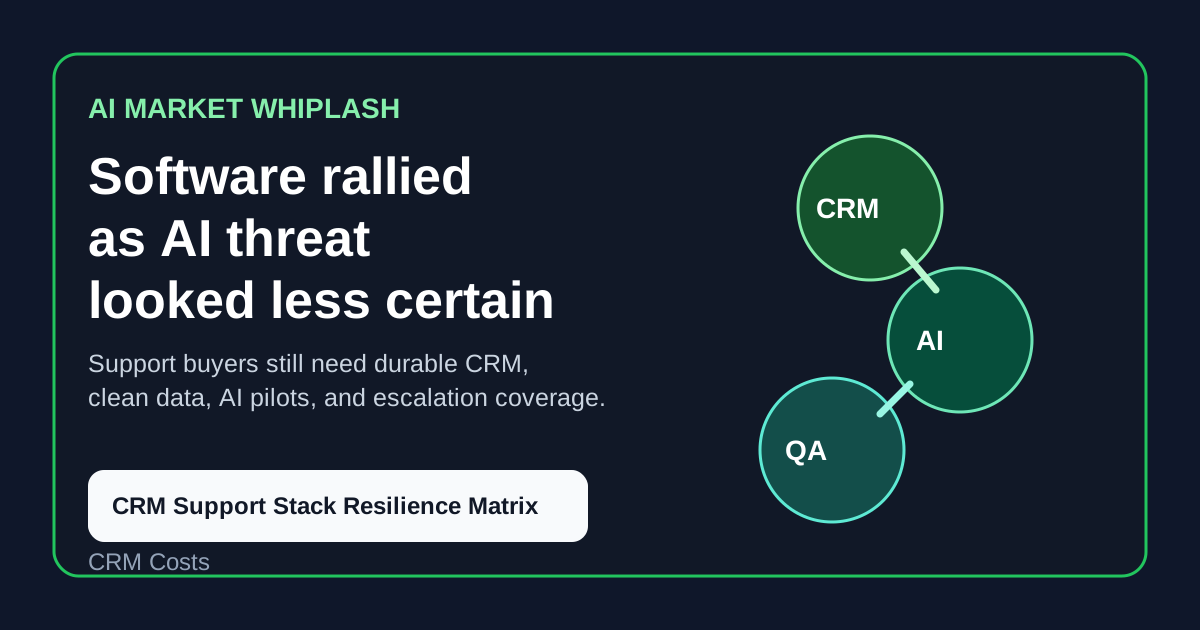
CRM Support Stack Resilience Matrix
A buyer framework for deciding which CRM, helpdesk, AI, and support operations layers should stay durable when AI market narratives swing between disruption and doubt.
Keep CRM and helpdesk authority explicit before adding AI write access or replacing workflows.
Compare migration cost, cleanup cost, retained staff work, and AI pilot results before changing platforms.
Start with one queue, define completion criteria, and measure reopens, corrections, and transfer quality.
Budget retained operators, QA reviewers, supervisors, and escalation owners as part of AI total cost.
Require before-and-after metrics for backlog, reopens, handle time, customer effort, missed follow-up, and cost per resolved issue.
What buyers should do next
Buyer FAQs
Did OpenAI announce an IPO delay?
The support-ops story is based on market reports that OpenAI may delay an IPO, not an OpenAI buyer announcement. Buyers should treat it as a market signal, not a product roadmap.
Why did software stocks rally?
MarketWatch reported that investors saw the potential OpenAI IPO delay as a sign that the AI threat to established software vendors may be less immediate than feared.
What should support leaders do with this news?
Use it as a reminder to avoid panic-driven platform churn. Protect the CRM or helpdesk system of record, clean support data, test AI in bounded queues, and measure total cost after rework and escalation.