

Direct answer
NAIC PeopleSoft breach ShinyHunters Oracle zero day 3.1TB: what CRM buyers should take from it
NAIC said it learned on June 11, 2026 that an unauthorized party accessed systems through an Oracle PeopleSoft vulnerability, obtained credentials, and reached certain data storage areas. NAIC said the data it has identified includes publicly available statutory financial reporting information, credit rating agency data, and routine technical information such as outdated logs and configuration data, with no evidence so far that PII, banking, or payment data was accessed. Support and CRM leaders should still treat the incident as a workflow-data warning.
Published 6/30/2026. News event: 6/26/2026.
What happened
- NAIC's public incident statement says it identified unauthorized access on or about June 11 and activated incident response procedures, law enforcement notifications, and external cybersecurity support.
- NAIC said the unauthorized party exploited an Oracle PeopleSoft vulnerability, obtained credentials, and gained temporary access to certain data storage areas.
- NAIC's June 25 update said its review found publicly available statutory financial reporting data, credit rating agency data, and technical information such as outdated logs and configuration data.
- SecurityWeek reported on June 29 that NAIC was targeted in the Oracle PeopleSoft zero-day campaign and that ShinyHunters claimed to have stolen 3.1 TB before later correcting some claims.
- Carrier Management reported that NAIC said state insurance department systems and several regulatory reporting systems were not impacted, while insurer groups asked for clearer direction about scope and implications.
Why this is trending
- The story connects a high-profile Oracle PeopleSoft zero-day campaign to a body that supports insurance regulators across all 50 states.
- The attacker claims and later corrections make scope validation part of the news, which is exactly what buyers face after workflow-system incidents.
- CRM, ERP, ticketing, analytics, and AI systems increasingly share exports, logs, credentials, feeds, and operational records that become expensive to review after an incident.
The CRM Costs take
A CRM or support-ops buyer should not wait for confirmed customer PII exposure before mapping workflow data. The costly work after a breach is often finding which systems exchanged records, which feeds and exports were reachable, which logs matter, who must be notified, and how operations continue while the investigation changes scope.
Workflow Data Risk Map
A buyer framework for auditing records, exports, feeds, logs, configurations, access paths, notifications, and recovery owners before connecting CRM, ERP, support, and AI systems.
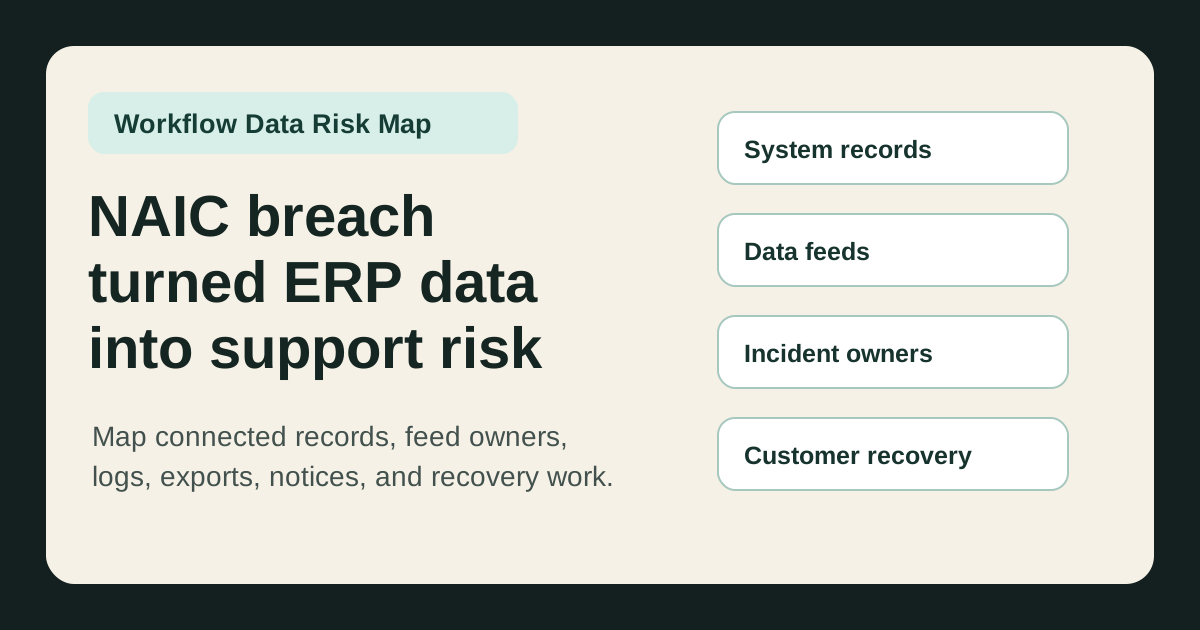
Map record classes, owners, access roles, and sensitivity before adding new integrations or AI read access.
Inventory recurring exports, feed credentials, storage buckets, retention windows, and downstream recipients.
Classify technical artifacts, scrub secrets, limit access, and define how log/config exposure is reviewed.
Create a communication ladder with evidence thresholds, owner names, customer FAQs, and update cadence.
Limit AI and outsourced roles by field, queue, export permission, write action, and audit log visibility.
What buyers should do next
Buyer FAQs
What did NAIC say happened?
NAIC said an unauthorized party exploited an Oracle PeopleSoft vulnerability, obtained credentials, and temporarily accessed certain data storage areas before access was blocked and systems were remediated.
Did NAIC confirm PII exposure?
NAIC said that, based on its review so far, it has no evidence that personally identifiable information, banking information, or payment data was accessed.
Why is this a CRM and support-ops issue?
Workflow systems often connect records, exports, feeds, logs, reporting, external support, and AI tools. Even limited technical or business-data exposure can create investigation, communication, cleanup, and operational-continuity work.