

Direct answer
Meta AI layoff lawsuit workforce scoring protected leave support operations risk: what CRM buyers should take from it
The Guardian reported on July 14, 2026 that former Meta employees filed a lawsuit alleging that Meta used a constellation of internal AI systems, performance ratings, and activity monitoring in mass-layoff decisions that disproportionately affected people who took maternity, disability, or other protected leave. AP independently reported the lawsuit and Meta's denial that AI made the decisions. Support-ops leaders should treat the case as a governance warning: do not let CRM activity, helpdesk output, AI summaries, QA scores, or productivity signals affect staffing without auditable inputs, protected-leave controls, human review, and an appeal path.
Published 7/15/2026. News event: 7/14/2026.
What happened
- The Guardian reported that former Meta employees sued over alleged discrimination in mass layoffs, including claims tied to maternity leave, disability leave, and other protected leave.
- The report said the complaint describes a constellation of internal AI systems, including performance ratings and activity monitoring, that allegedly informed layoff selections.
- The Guardian reported that plaintiffs seek to stop the terminations and ask for an independent audit of the systems and processes used.
- AP independently reported the federal lawsuit in California and Meta's position that decisions were made by people, not by AI.
- For support operations, the issue is not Meta's liability outcome. It is whether AI-assisted workforce scoring can be explained, audited, corrected, and appealed before it affects real workers.
Why this is trending
- The story connects AI governance to employment consequences, not just chatbot accuracy or software spend.
- Support teams already generate the signals that workforce analytics can overuse: ticket counts, handle time, QA scores, CRM updates, keystrokes, messages, call notes, and AI summaries.
- If protected leave, disability accommodations, part-time schedules, language mix, queue difficulty, or system outages are not handled correctly, productivity scoring can turn ordinary operations data into unfair employment risk.
The CRM Costs take
A support-ops buyer should not accept a black-box productivity score, AI performance ranking, or workforce optimization dashboard as neutral evidence. The buyer needs an AI Workforce Scoring Risk Map: source records, protected-leave exclusions, queue difficulty adjustment, scoring logic, human review, audit trail, appeal workflow, and correction process before those signals affect staffing, bonuses, schedules, or layoffs.
AI Workforce Scoring Risk Map
A buyer framework for validating AI-assisted workforce decisions across input records, protected leave, scoring logic, human review, audit trails, and appeal workflows.
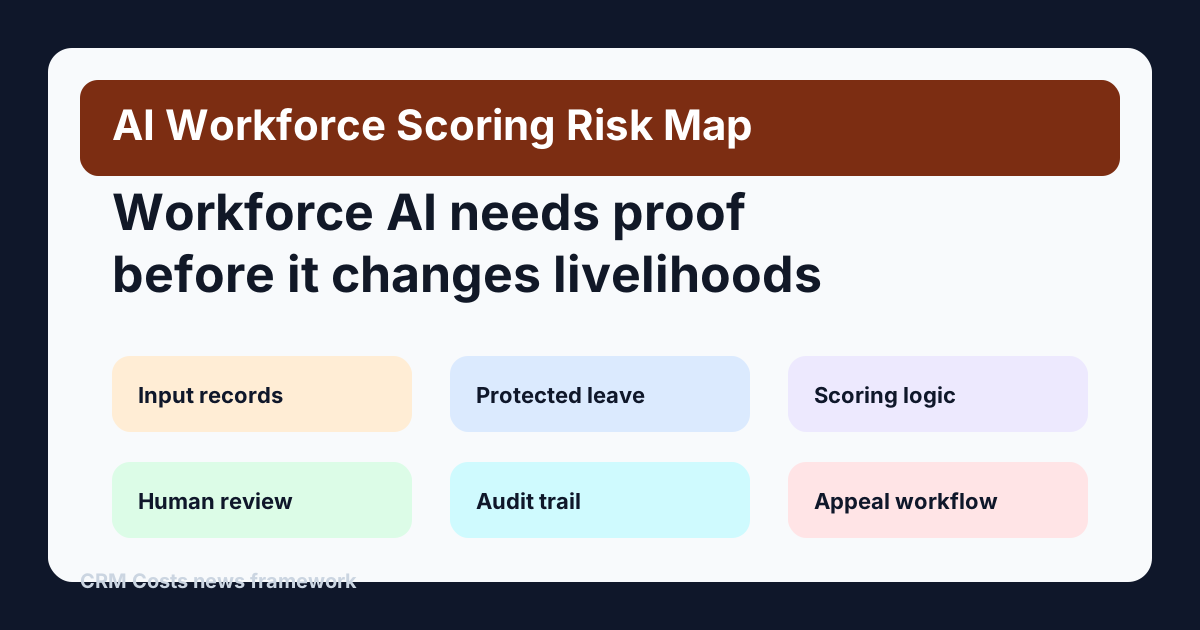
Inventory every input field, source system, refresh cadence, excluded period, and data owner before using the score operationally.
Document leave exclusions, normalization rules, accommodation handling, legal review, and manager guidance before reports are used.
Require feature explanations, weighting rules, sample outputs, adverse-impact review, and a plain-language scorecard.
Assign an accountable reviewer, require documented overrides, and sample decisions against raw tickets, calls, QA, and context.
Keep versioned exports, source snapshots, access logs, reviewer notes, correction history, and legal-hold procedures.
Create an appeal route with record disclosure, correction SLA, independent reviewer, outcome notice, and suppression of bad data.
What buyers should do next
Buyer FAQs
What is the Meta lawsuit about?
Former Meta employees allege that internal AI systems, performance ratings, and activity monitoring contributed to discriminatory mass-layoff decisions affecting workers who took maternity, disability, or other protected leave. Meta disputes the allegations and says people made the decisions.
Why should CRM and support leaders care?
Support operations produce the data that workforce scoring tools often use: ticket volume, handle time, QA scores, activity logs, customer sentiment, manager notes, and AI summaries. Those signals can be misleading without context and protected-leave controls.
What should buyers ask vendors or internal teams for?
Ask for input-field inventory, protected-leave rules, scoring explanation, queue-difficulty adjustment, human review workflow, audit exports, correction process, and worker appeal path before AI-assisted scores affect employment decisions.