

Direct answer
Klue OAuth Salesforce breach LastPass Huntress: what CRM buyers should take from it
The Klue incident showed that a trusted CRM integration can become a support-cost problem. LastPass said Klue OAuth tokens were used to access Salesforce customer data, including names, phone numbers, email addresses, physical addresses, support case data, and sales data, while LastPass vaults, products, and infrastructure were not affected. Huntress said Klue disabled OAuth credentials and integrations across Salesforce, HubSpot, SharePoint, Zoom, Gong, Chorus, Clari, Google Drive, and Slack App. Support leaders should audit connected apps before adding AI agents or outsourced operators to CRM workflows.
Published 6/27/2026. News event: 6/23/2026.
What happened
- LastPass said it learned on June 12, 2026 that Klue had identified unauthorized activity involving its Salesforce, Gong, and other integrations.
- LastPass said an unauthorized actor obtained OAuth tokens through Klue and used those credentials to access LastPass customer data inside Salesforce.
- Huntress reported that Klue deactivated OAuth credentials for all customers and disabled integrations spanning CRM, collaboration, sales, video, and document platforms.
- The Hacker News reported that Klue connected the incident to a compromised legacy credential and OAuth tokens used for automated API queries.
- Cybersecurity Dive independently reported that the Salesforce integration attack affected hundreds of enterprise customers and that Salesforce disabled the Klue app while the issue was investigated.
Why this is trending
- The incident connects a cyber headline to CRM operating cost: customer notices, case review, token cleanup, vendor investigation, and trust recovery.
- Support teams increasingly add AI agents, enrichment tools, call summaries, outsourced operators, and analytics apps to the same CRM records.
- A single connected app can expose support-case data even when the core CRM and helpdesk remain online.
The CRM Costs take
A CRM support buyer should treat connected apps as part of total support cost. Every app with read or write access to contacts, cases, messages, transcripts, account notes, or sales fields needs an owner, a scope limit, a removal path, and a response plan. Otherwise the apparent productivity gain can turn into incident labor, customer communication, compliance review, and manual cleanup.
CRM Integration Cost-Risk Map
A buyer framework for auditing connected apps, OAuth scopes, support-case exposure, vendor offboarding, incident response, and human support workload before expanding CRM automation.
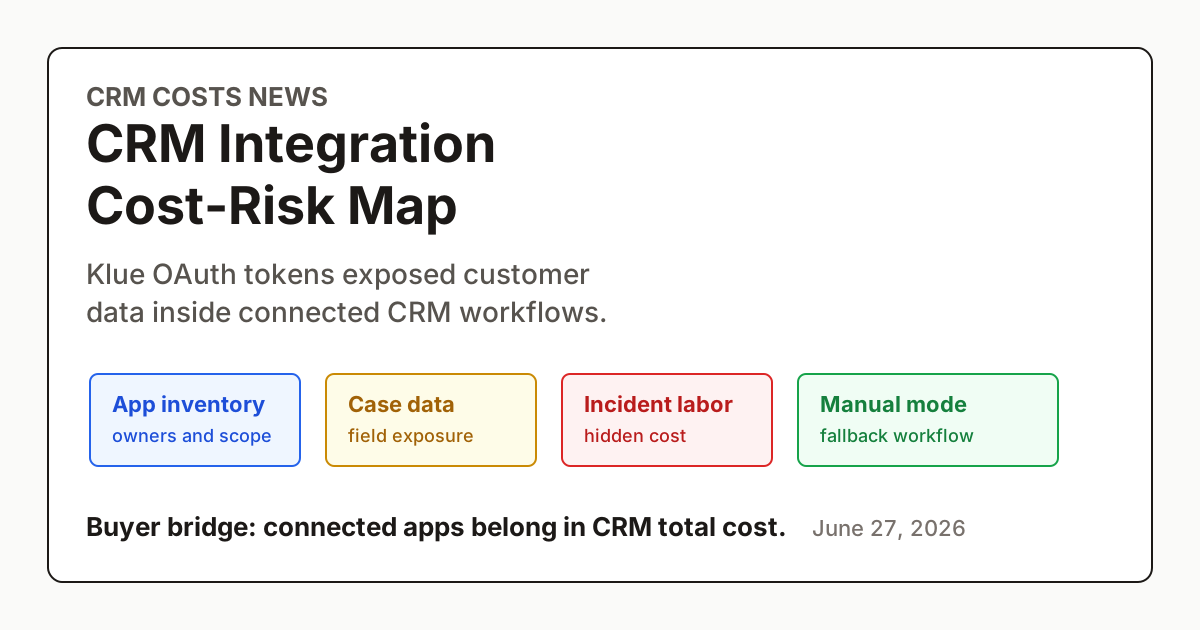
Create a monthly connected-app register with owner, data access, purpose, renewal date, and offboarding steps.
Reduce scopes, rotate tokens, remove stale apps, and require least-privilege review for new tools.
Classify case fields, redact sensitive data, and limit support-history access by workflow need.
Document disable steps, fallback owners, manual queues, and customer communication templates.
Add integration incident labor to CRM total cost models and require vendor evidence before expanding access.
What buyers should do next
Buyer FAQs
Did LastPass say vaults or products were affected?
No. LastPass said its products, infrastructure, and encrypted vault data were not affected, but customer data inside Salesforce was accessed through Klue OAuth tokens.
Why does this matter to CRM support cost?
Support teams may need to review exposed cases, notify customers, rotate tokens, disable apps, rebuild workflows, and staff manual processes after a connected-app incident.
What should buyers audit first?
Start with connected-app inventory, OAuth scopes, CRM field access, support-case exposure, vendor offboarding steps, and manual fallback workflows.