

Direct answer
IBM 2026 cost of data breach AI enabled attacks CRM support data risk map: what CRM buyers should take from it
IBM's 2026 Cost of a Data Breach report says one in four malicious breaches were AI-enabled and averaged $6 million in cost, about $1 million more than the global average breach cost of $4.99 million. CRM and support-ops buyers should respond with a CRM AI Breach Exposure Map before agents, copilots, integrations, and service accounts touch sensitive customer workflows.
Published 8/1/2026. News event: 7/29/2026.
What happened
- IBM released its 2026 Cost of a Data Breach report on July 29, 2026.
- IBM's newsroom summary said one in four malicious breaches were AI-enabled and cost companies $6 million on average.
- IBM reported the global average cost of a data breach was $4.99 million, up 12% year over year.
- The report also said AI-driven attacks increased 56%.
- IBM's Think coverage framed AI adversaries as an enterprise-risk problem tied to governance, visibility, and controls.
- Cybersecurity Dive and Help Net Security independently covered the AI governance and breach-cost findings.
Why this is trending
- The report created a hard cost anchor for AI-enabled attacks rather than another abstract AI risk warning.
- Support and CRM systems are high-value targets because they contain customer records, attachments, internal notes, account history, refunds, disputes, identity evidence, and escalation context.
- AI agents, copilots, and automation accounts can add non-human identities and tool permissions that are easy to undercount.
- The story connects security leadership and operations buyers: breach cost depends on data inventory, access scope, evidence quality, and recovery labor long before legal notification begins.
The CRM Costs take
A CRM or support buyer should not treat IBM's breach-cost number as only a CISO metric. The buyer needs a CRM AI Breach Exposure Map showing where customer data lives, which AI tools and service accounts can reach it, which ticket attachments are sensitive, who owns incident queues, what evidence proves containment, and how recovery cost is tracked.
CRM AI Breach Exposure Map
A CRM and support-ops buyer framework for mapping AI-enabled breach exposure across attack paths, customer data, non-human identities, ticket attachments, incident queue ownership, and recovery cost.
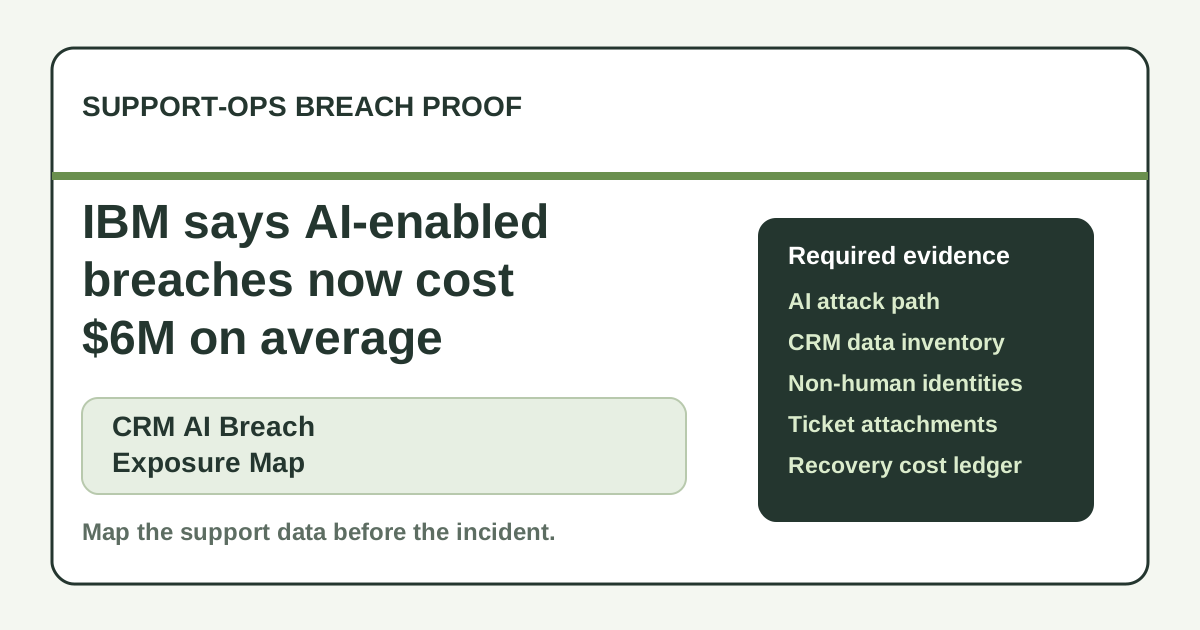
Inventory every AI-enabled support tool, integration, service account, workflow bot, OAuth app, and automation owner.
Map sensitive CRM objects and fields by owner, system of record, retention rule, export path, and customer-notice trigger.
Require named non-human identities, scoped permissions, token expiry, rotation evidence, and owner-approved revocation.
Classify attachments, block sensitive fields from AI context where needed, set retention rules, and sample exports.
Create breach-support queues with approved scripts, escalation owners, affected-record tags, callback rules, and daily reporting.
Track recovery labor, notices, escalations, refunds, dispute handling, QA, policy fixes, and customer-save outcomes by incident.
What buyers should do next
Buyer FAQs
What did IBM report about AI-enabled breaches?
IBM reported that one in four malicious breaches were AI-enabled and averaged $6 million in cost, about $1 million more than the global average breach cost of $4.99 million.
Why does this matter to CRM and support operations?
CRM and support systems hold customer records, internal notes, attachments, transcripts, disputes, refunds, and escalation context. AI tools and service accounts can expand who or what can reach that data.
What proof should buyers ask for first?
Ask for an AI access inventory, CRM data map, non-human identity list, ticket attachment controls, incident queue owner, and recovery-cost ledger.