

Direct answer
FTC Cleo AI refunds cancellation subscription cash advance app October 2026: what CRM buyers should take from it
The FTC said on October 8 that it was returning more than $15.8 million to consumers it said were misled by Cleo AI's cash-advance app. The agency's release says customers were charged subscription fees for instant cash advances, that many advances were lower than advertised, and that cancellation was difficult. The original complaint alleged deceptive advance claims and unfair subscription cancellation practices; Cleo agreed to a settlement without admitting wrongdoing. Support-operations buyers should treat the event as a cancellation evidence warning: subscription desks need fee disclosure, cancellation-path, refund, complaint and retention proof before scale.
Published 10/14/2026. News event: 10/8/2026.
What happened
- The FTC's October 8 release says the agency is sending refunds to consumers affected by Cleo AI's practices.
- The release says the FTC alleged consumers were charged monthly subscription fees while many received lower cash advances than advertised.
- The FTC case materials say the complaint challenged cash-advance advertising and subscription cancellation practices.
- This article treats the refund distribution as a support-ops evidence trigger, not as legal advice or a finding about unrelated subscription products.
Why this is trending
- Subscription cancellation is not only a checkout or billing issue. It becomes a support-cost, complaint and refund workflow when users cannot stop charges cleanly.
- Financial-app support queues often combine marketing claims, account status, fee disputes, cancellation requests and refund decisions in the same operational surface.
- This is distinct from recent automated-deactivation coverage because the buyer evidence here is cancellation and refund proof, not human review of account restrictions.
The CRM Costs take
An illustrative support operation may sell an app subscription, add a paid speed upgrade, promise a benefit range and route cancellation through chat, email, app settings or an outsourced desk. If users complain later, support needs to prove what fee was shown, how cancellation worked, which ledger entry changed, whether a refund was owed and how the customer was notified. This framework is a planning aid, not legal advice or a claim about any buyer's obligations.
Cancellation Proof Map
An original support-operations map for fee disclosure, cancellation route, subscription ledger, refund queue, complaint trigger and retention proof.
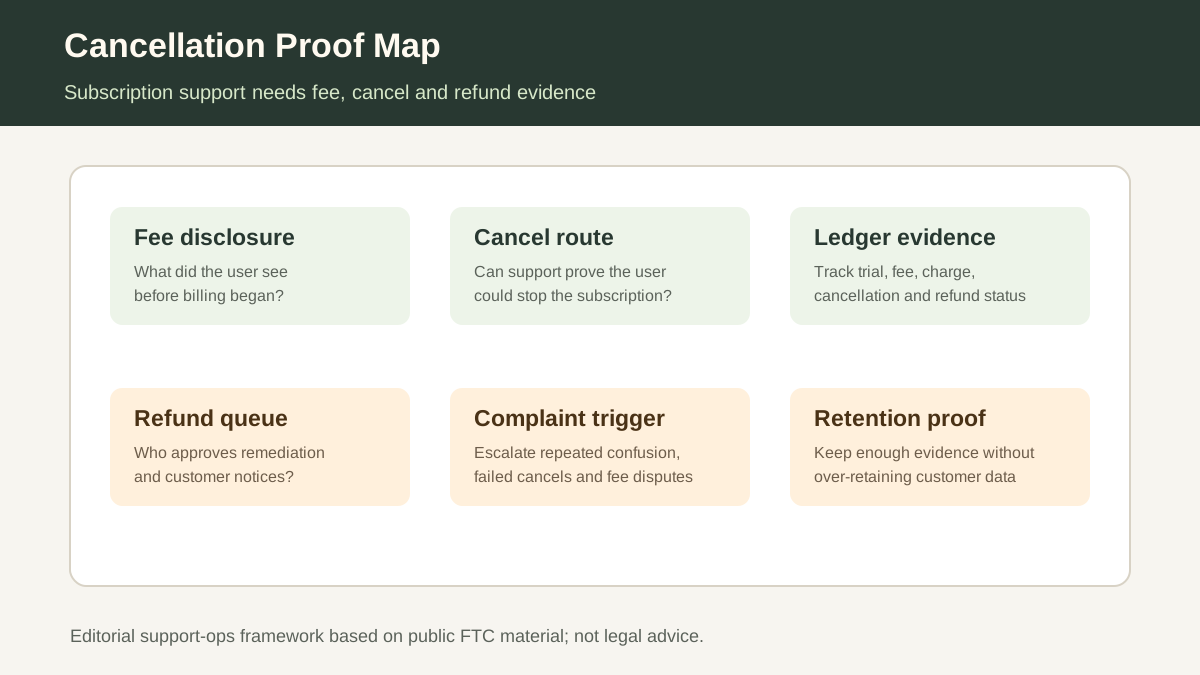
Retain offer version, consent event, plan terms, billing start, paid add-on and customer-visible wording.
Document cancel entry points, agent authority, confirmation wording, timestamps and failure handling.
Create a single support-facing ledger view with charge, cancel, refund and notice events.
Define refund reason codes, approval thresholds, exception owners and customer notification templates.
Track complaint rate, failed-cancel rate, refund disputes, chargebacks and repeat contact drivers.
Set retention windows for offer views, cancellation logs, refund decisions, notices and QA samples.
What buyers should do next
Buyer FAQs
Did Cleo admit wrongdoing?
The FTC settlement records say the order resolved allegations; settlement language does not require treating the case as an admission of every allegation.
Does this apply only to cash-advance apps?
No. The support lesson applies to any subscription or paid add-on where users may dispute fees, benefits, cancellation or refunds.
Can support scripts fix a cancellation risk by themselves?
No. Scripts help, but the team also needs working cancellation routes, billing evidence, refund authority and complaint analytics.
Is this legal advice?
No. It is an operations evidence map. Subscription, financial-product and consumer-protection questions need qualified legal review.