

Direct answer
CenterPoint customer data breach CRM response cost map: what CRM buyers should take from it
CenterPoint Energy's SEC filing turns customer-data exposure into a CRM and support-ops cost issue. The company said an unauthorized third party obtained personal information through an external-facing system and that affected customers and regulators would be notified as required. Buyers should budget the support layer behind that disclosure: data-scope review, notice routing, identity-safe verification, fraud guidance, access-log preservation, escalation ownership and closure evidence.
Published 9/16/2026. News event: 9/14/2026.
What happened
- CenterPoint filed a Form 8-K dated September 14, 2026 after becoming aware of an online post claiming to have obtained a data set containing certain customer information.
- The filing says CenterPoint activated cybersecurity incident-response protocols, started an investigation with third-party cybersecurity experts and took steps to further protect systems.
- CenterPoint said its investigation determined that an unauthorized third party obtained personal information relating to a portion of customers through one external-facing system.
- The filing says electric and gas services were not impacted and remained operational and undisrupted.
- Reuters, via KSL and Insurance Journal, reported the filing and noted CenterPoint's statement that cyber insurance is expected to offset related costs.
- Houston Chronicle and Chron coverage reported proposed class actions and allegations about guest bill pay and customer data; the exact scope remains under investigation.
Why this is trending
- The story connects critical-infrastructure customer trust with ordinary support workflows: notices, identity checks, account questions, fraud guidance and escalation queues.
- External-facing systems often feed CRM, billing, portal, ticketing and notification workflows, so the breach response is not only a security-team exercise.
- Customers who receive a notice may call, email or chat before the company has complete answers, which creates cost in training, scripts and supervision.
- Lawsuits and regulator notices increase the need to preserve evidence of what support agents knew, said, changed and escalated.
- Utility impersonation scams become more convincing when attackers may know account, address or billing context, so support scripts need identity-safe verification rules.
The CRM Costs take
A CRM buyer should treat data-exposure response as a funded support workflow, not an improvised statement after security confirms scope. The buyer needs a map for record scope, notice timing, caller verification, fraud scripts, dispute intake, access logs, regulator handoff and closure evidence. Otherwise the support team absorbs the incident cost with unclear authority and inconsistent answers.
Customer Data Response Cost Map
A CRM and support-ops buyer map for budgeting breach-response scope, customer notices, identity-safe verification, fraud scripts, access logs and closure evidence.
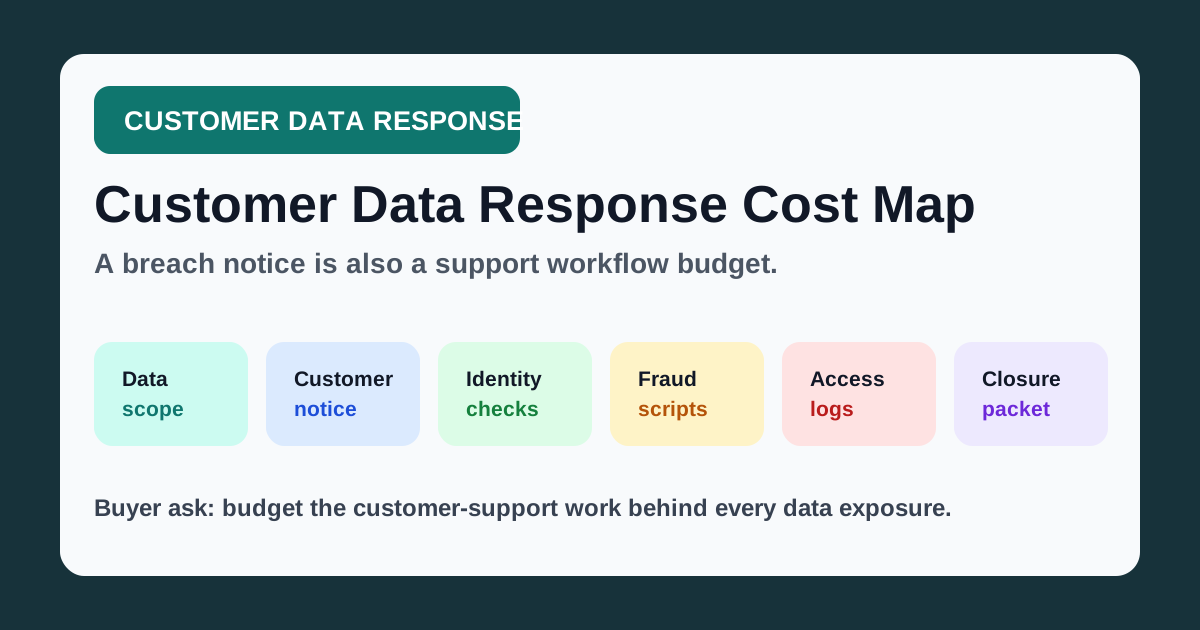
Create a live scope register with confirmed, unconfirmed and excluded data categories plus the owner of each update.
Use one approved notice packet with version control, channel owner, update time and escalation route.
Define safe verification prompts, forbidden fields, callback paths and supervisor approval for exceptions.
Prepare fraud guidance, known-contact routing, payment-warning language, dispute intake and suspicious-message capture.
Tie access logs, notice batches, ticket IDs, agent notes, approvals and customer outcomes to an incident record.
Keep a closure packet with final scope, notice proof, FAQ versions, call drivers, escalations, remediation and unresolved issues.
What buyers should do next
Buyer FAQs
Is this only a utility-sector issue?
No. Any CRM or support operation with customer identities, service addresses, billing context, account notes or portal data needs the same response map if an external-facing system exposes records.
What should support teams avoid saying first?
Avoid confirming unverified threat-actor numbers, data categories or legal conclusions. Scripts should separate confirmed company facts from allegations and direct customers to approved verification paths.
What is the first budget item after a breach notice?
Budget customer-response capacity: notice operations, identity-safe verification, fraud guidance, ticket tagging, escalations, QA, supervisor review and evidence retention.